GovTech · National healthcare
W-CIS — clinic information system
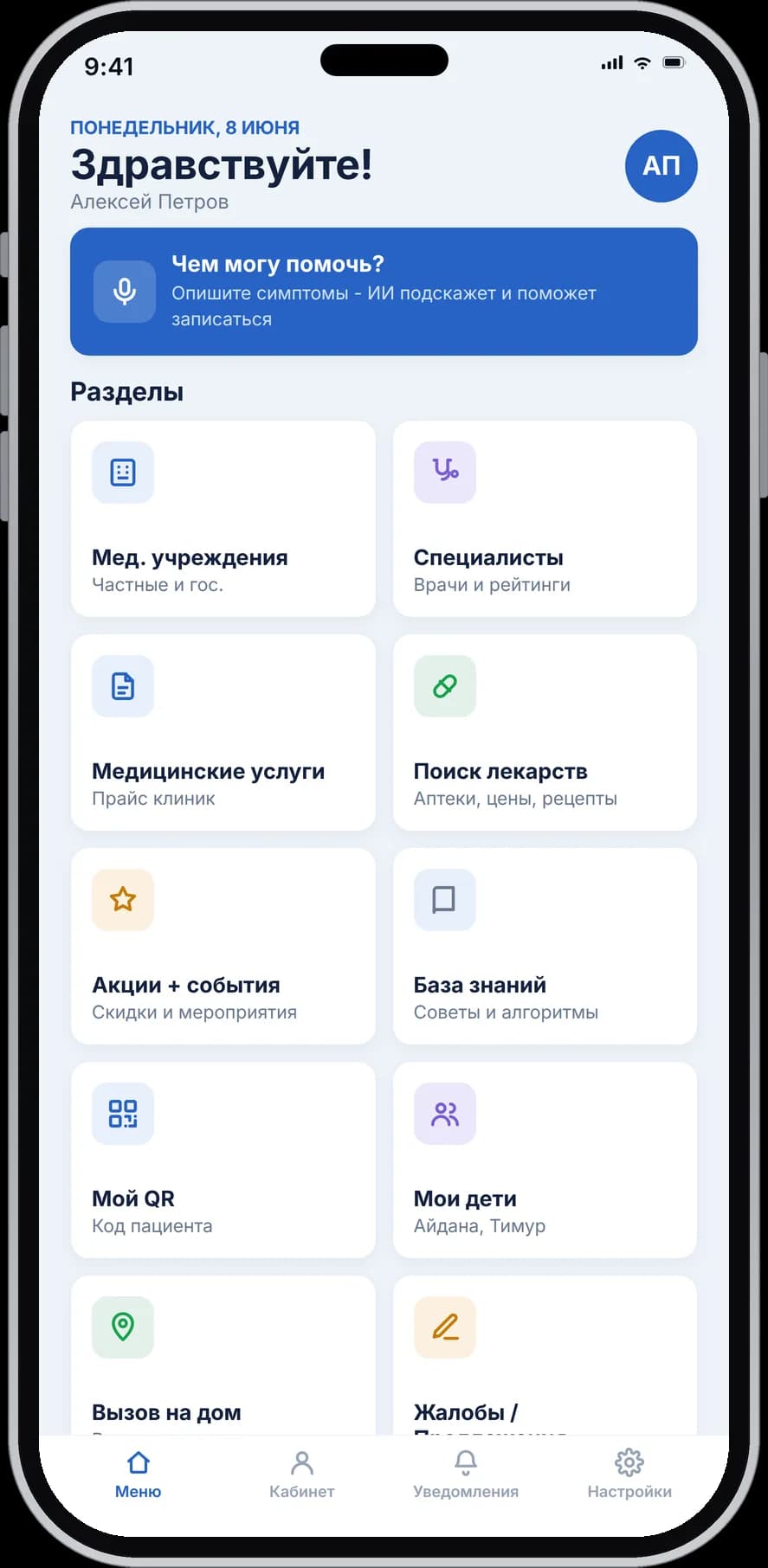
One system for the patient, the doctor and the ministry. A clinic information system: electronic medical records, doctor schedules, appointments and analytics.
View the case
What the ecosystem can do
- Industry
- Healthcare
- Roles in the system
- 8
- Screens in the system
- 110
- Data levels
- 3
- AI assistants
- 2
Challenge
Clinics kept patient records on paper and in scattered programs: booking, appointments and payments were disconnected.
Solution
We built W-CIS: electronic medical records, online booking and doctor schedules, appointment management with protocols and prescriptions, a billing module, automation of the facility's internal processes and clinic analytics.
The roles
Eight roles, one data loop
Every participant sees their own interface but works with the same patient record: from an app booking to the minister's dashboard. Pick a role:
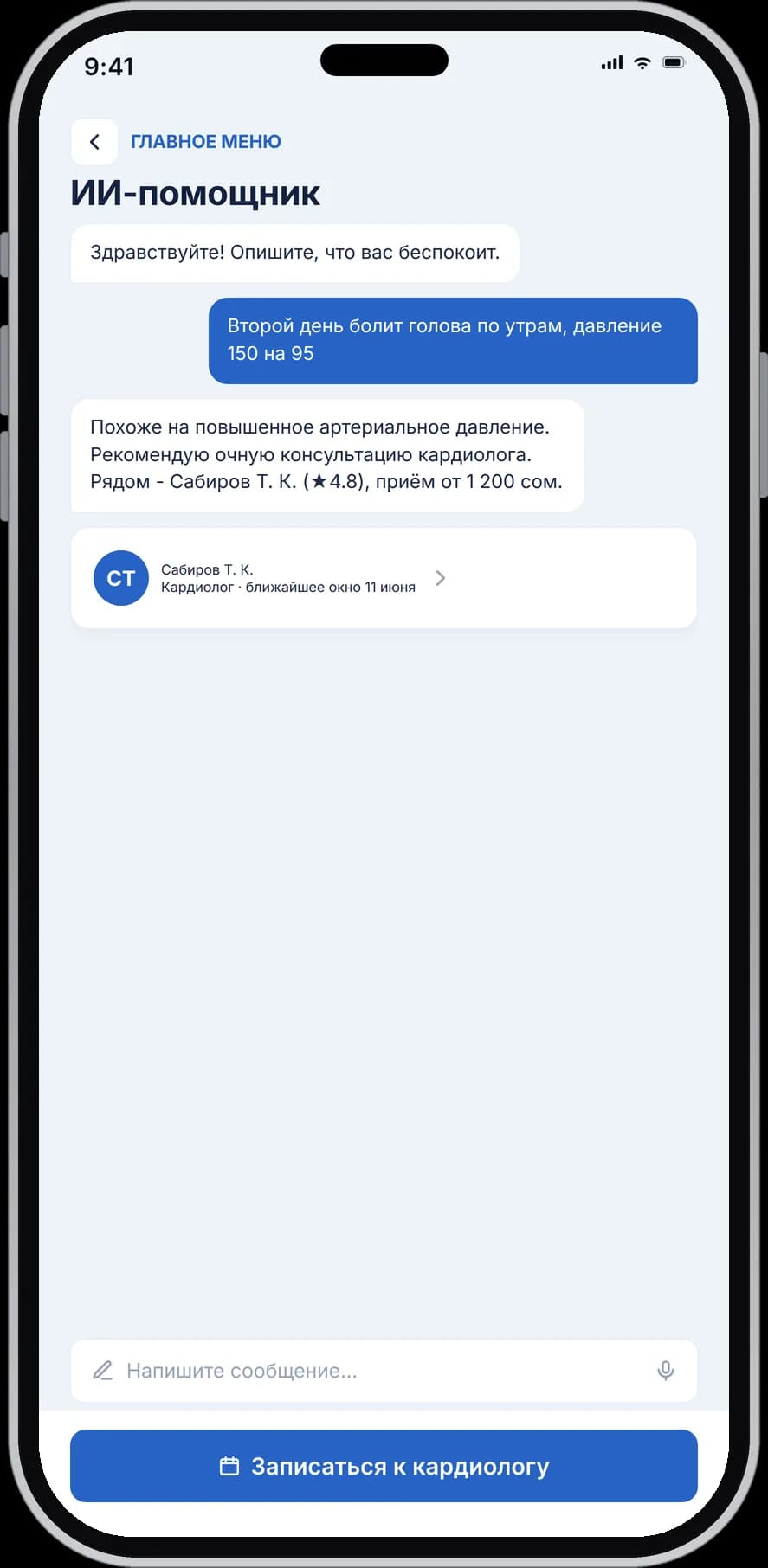
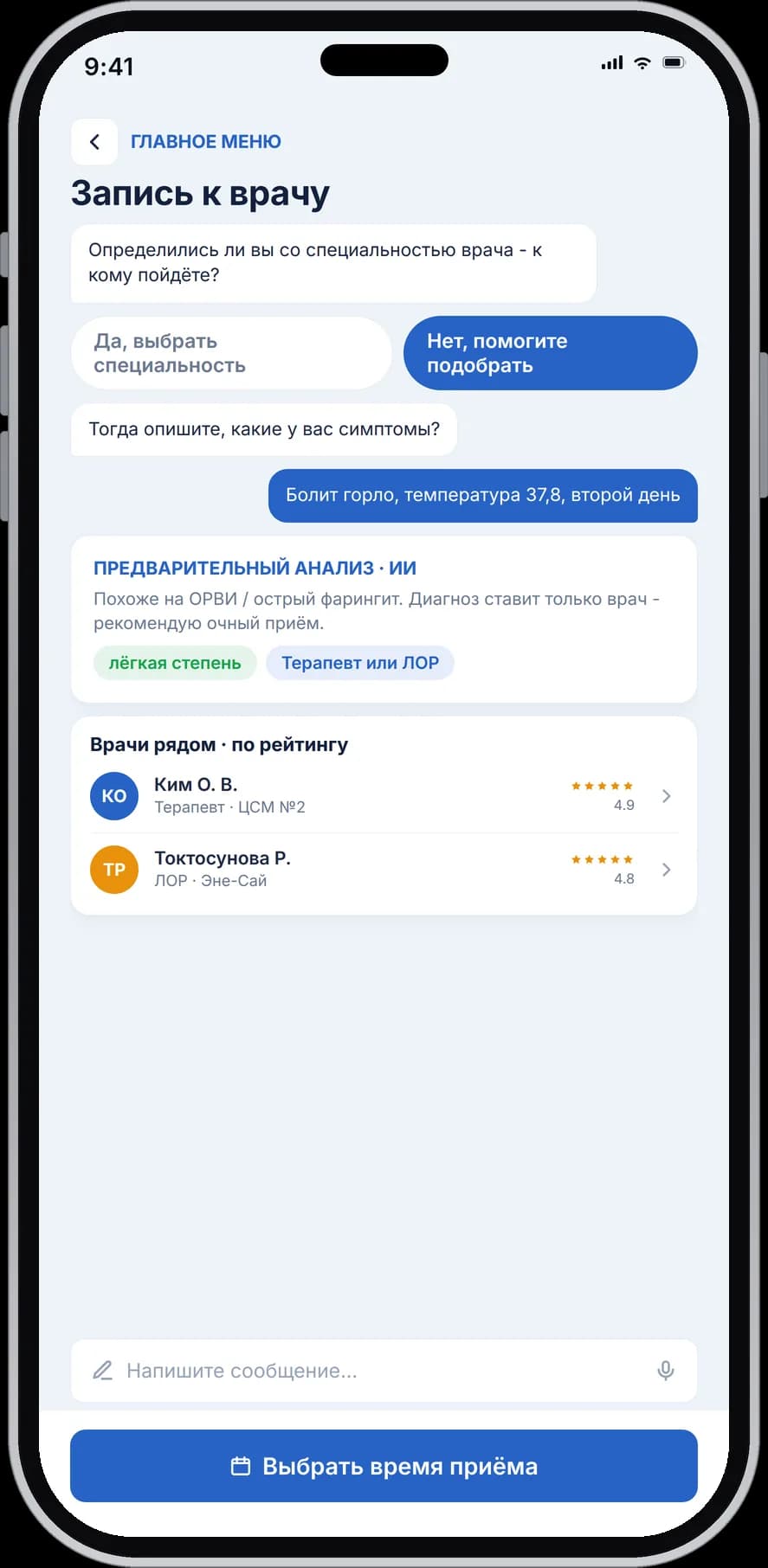
Books doctors, calls help at home, keeps the whole family's records and consults the AI assistant.
An end-to-end scenario
The e-prescription under full control
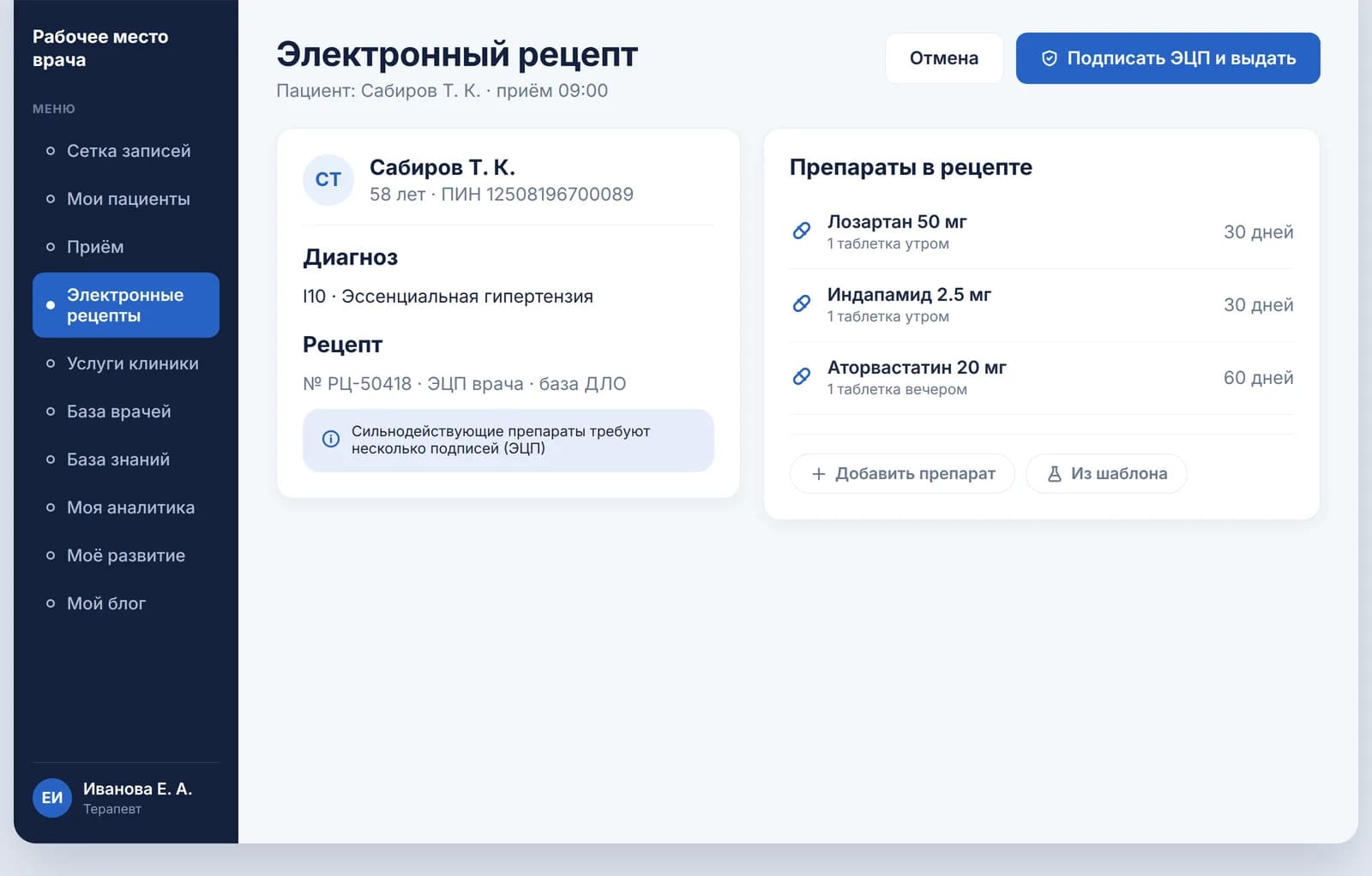
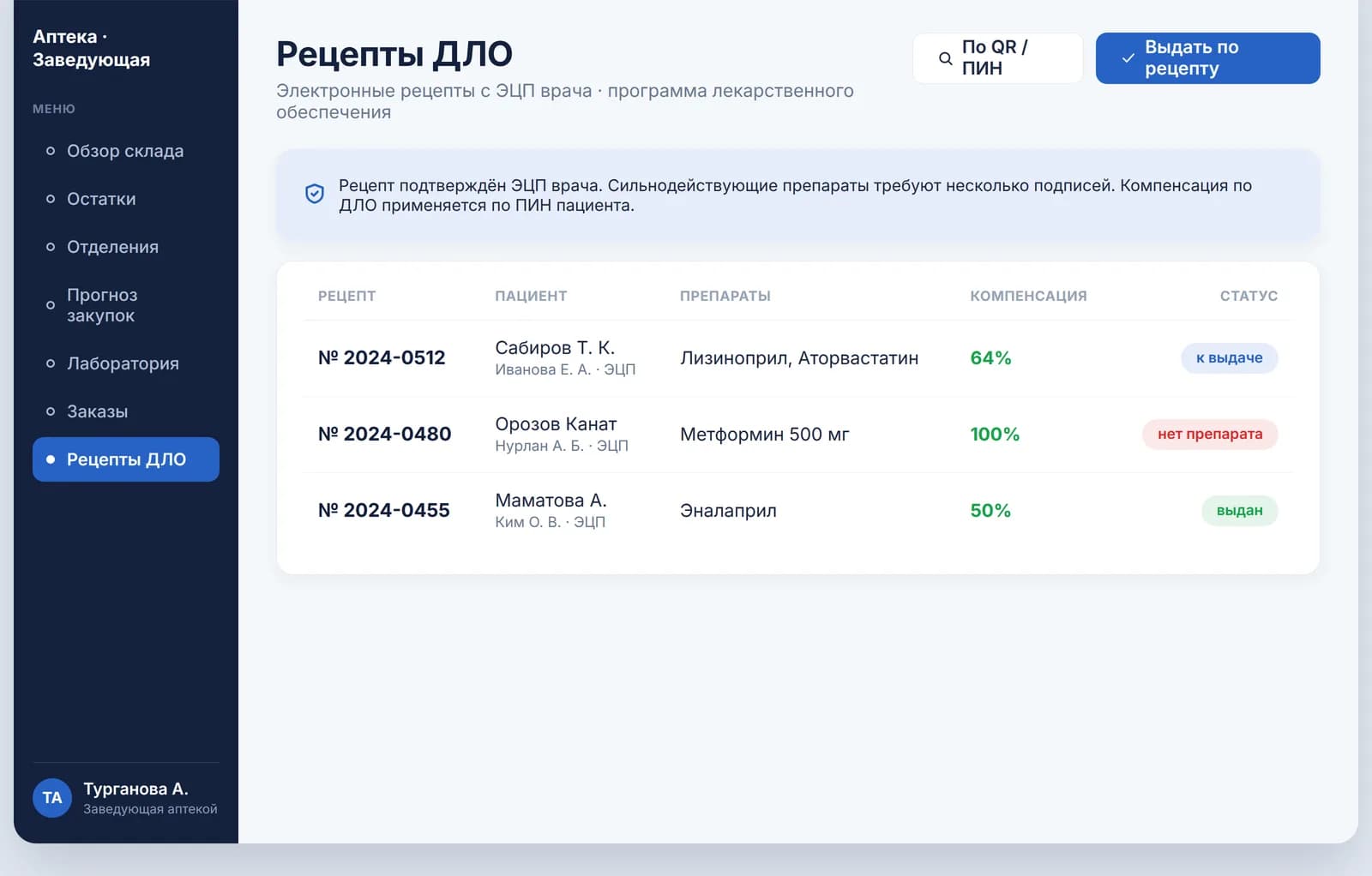
The doctor issues an electronic prescription, the patient sees it in the app with pharmacy prices, and the system accounts for every dispense: selling more than prescribed is impossible. Try the scenario:
Prescription No. RX-2026-004417
Losartan 50 mg, tablets
90
prescribed · packs
30
dispensed · packs
60
remaining · packs
No paper forms
A prescription exists only in electronic form: forging a form is ruled out.
Dispense control
The system tracks prescribed and dispensed amounts per prescription across all pharmacies at once.
Subsidised coverage
Subsidised prescriptions are dispensed with a state compensation rate, and reporting assembles itself.
The emergency loop
Identifying an unconscious patient
When the patient cannot answer questions, minutes matter. W-CIS reduces identification and access to the medical history to seconds.
01
Face biometrics
The crew identifies the patient with a tablet camera when QR and documents aren't available.
02
The emergency card
Chronic diagnoses, regular medications, allergies and family contacts on one screen.
03
The hospital is warned
The ER receives the data before the ambulance arrives: doctors are ready for the patient in advance.
The country level
The Ministry of Health sees the sector in real time
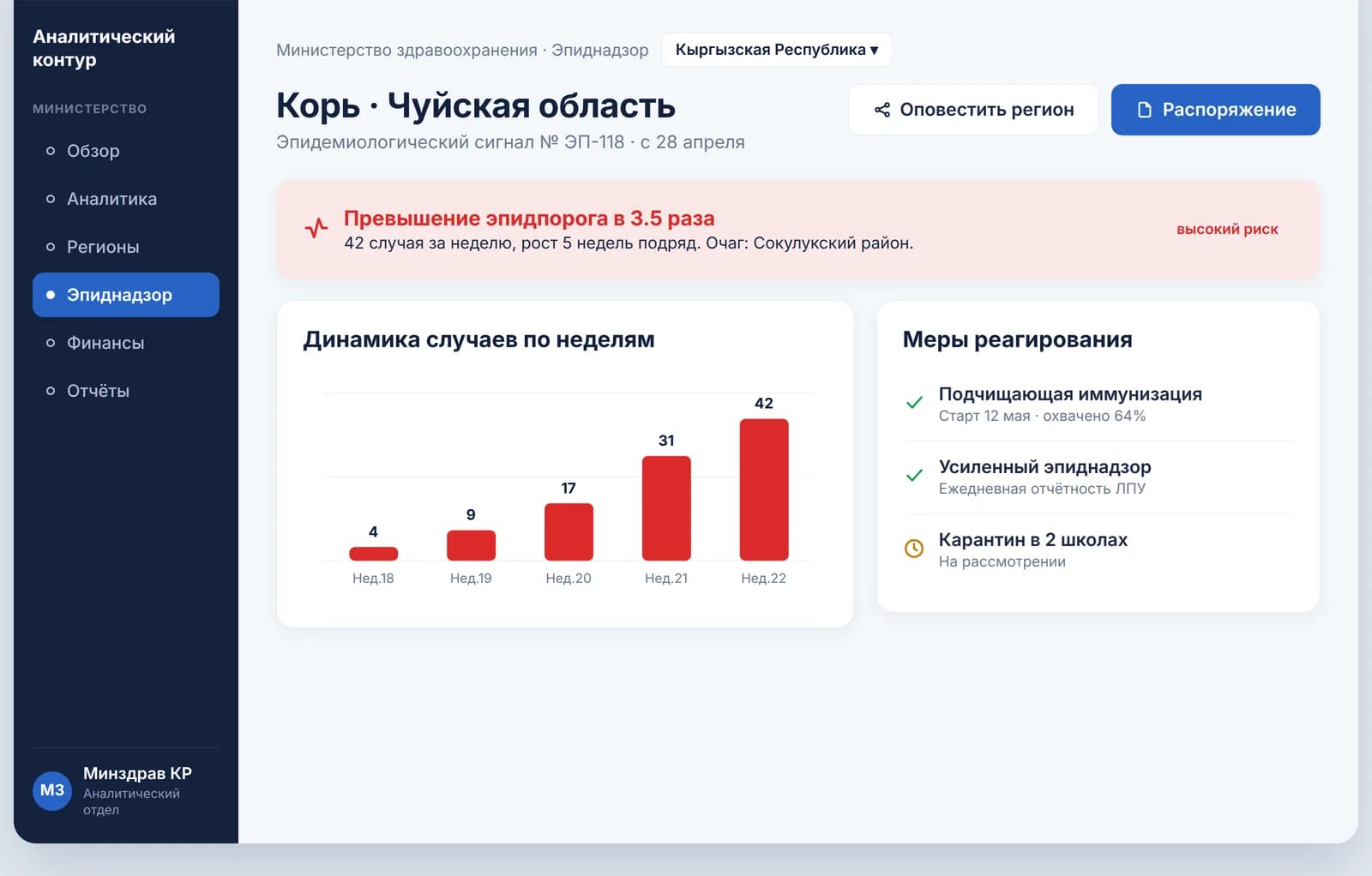
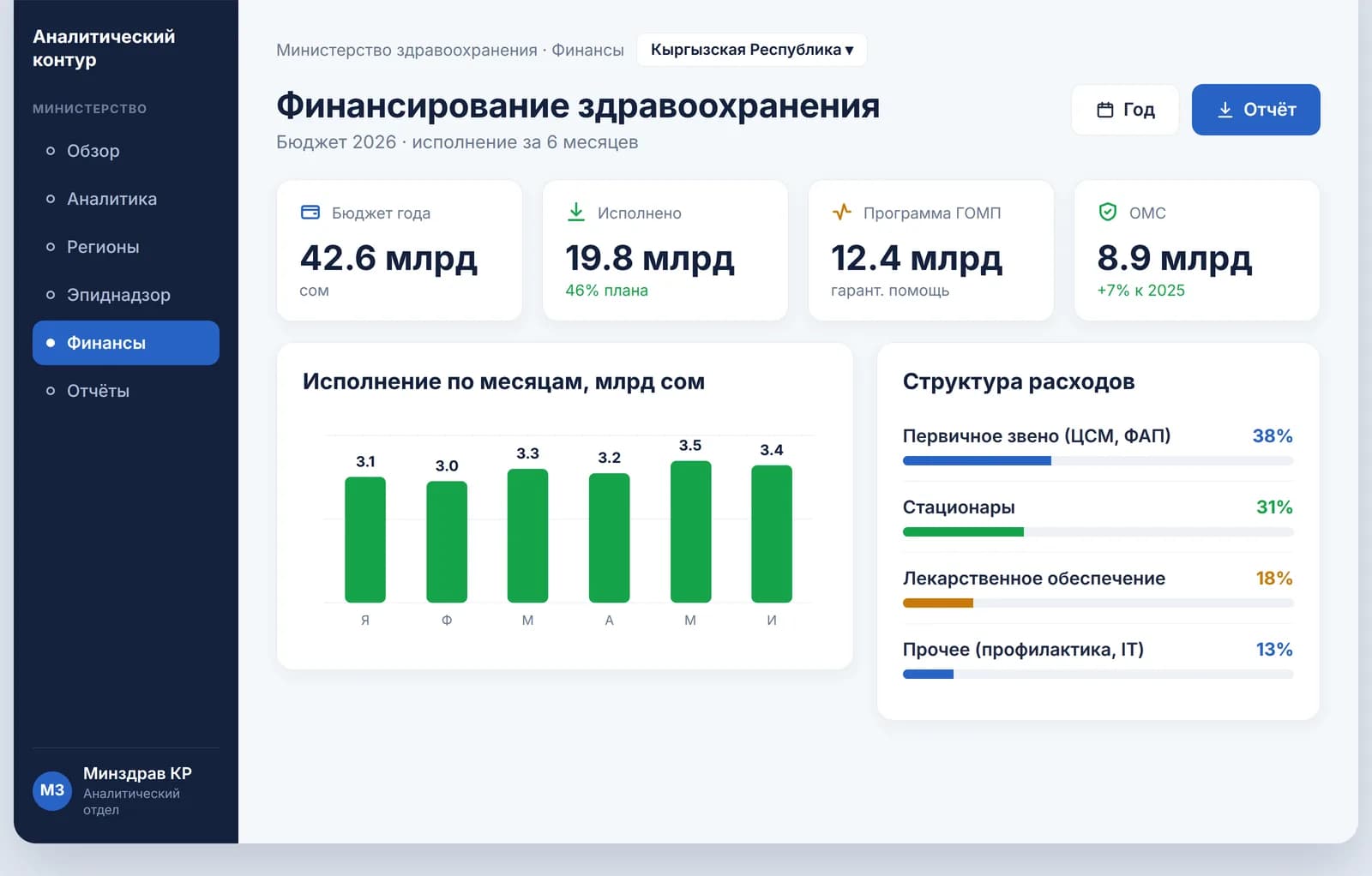
Data that used to arrive in quarterly reports now flows up from the clinics automatically: morbidity, vaccination, finances and epidemiological signals for every region.
Surveillance alerts
Threshold breaches are flagged automatically, with weekly dynamics and response measures.
Regional dashboards
For every region: enrolment, vaccination coverage, facility digitisation and district-level cases.
A legacy HIS integrator
Clinics with existing systems join via an integrator: data flows into the shared loop without a local revolution.
The system in numbers
screens in the system
ecosystem roles
data levels
patient screens
doctor screens
AI assistants
Architecture
How the system is built
Role-based access control
Each of the eight roles works only within its own data scope: from a patient's personal record to sector-wide indicators.
Patient identification
A QR code, a personal number and face biometrics cover every intake scenario, including emergencies.
A single patient record
Every level of the system works with one medical record: from the front desk to the Ministry of Health, with no data duplication.
Medical AI
Two assistants: a patient helper for navigation and booking, and a medical AI supporting the doctor during visits.
Result
Clinics moved to a unified digital system: a patient's history is available to the doctor in seconds, and management sees utilisation and revenue in real time.
Next project
W-LIS — laboratory information system